Viewers Can't Tell, but It Still Underperforms: Where AI Video Ads Fall Short and Where Brands Need People

AI-made video ads are now realistic enough that most people cannot tell them apart from human work. But "can't tell it's AI" and "the ad works" are two different things. A study by research firm Ipsos and Syracuse University's Newhouse School put human-made ads from 10 well-known brands up against fully AI-generated versions built from the same strategic brief. Viewers could not tell which was which, yet the AI video ads landed below the benchmark for predicted sales impact. One of the authors, Adam Peruta, wrote in Harvard Business Review this September that the real risk is not obviously bad creative but work that looks good enough to approve. Here is what the study found, and three places where brands should keep people in the AI video process.
How the Study Worked: One Brief, Two Makers

According to Syracuse University's May release, the team selected existing ads from 10 brands: Cheerios, Chewy, Febreze, Fiat, H&M, Old Navy, Herbal Essences, Ray-Ban Meta, TurboTax and Visa. All of the human-made spots were produced before 2021, so none could have used generative AI.
Each one was then paired with a fully AI-generated counterpart built from the same strategic brief. AI handled everything a creative team would, from interpreting the strategy and developing a concept to producing the finished spot. The 20 ads were shown to 3,000 U.S. consumers and scored with Ipsos's ad assessment tool.
Peruta put it plainly: both versions started from the same brief, and the only thing that changed was who made them. That was exactly what the study set out to measure.
The Result: Viewers Can't Tell, but AI Video Ads Fall Behind

Start with detection. Among viewers who saw an AI version, only 13% were at least somewhat confident it was AI-made. Among viewers who saw a human-made version, 13% suspected AI as well, the same share. Another 40% said they could not tell either way. On looking real, AI has passed.
Effectiveness is where the gap opens:
- Human-made ads scored 11 points above Ipsos's sales-validated benchmark on average.
- AI-made ads scored 5 points below it.
- Trade outlet Campaigns & Elections reported in September that the AI versions were about 14% weaker on short-term effectiveness and about 17% weaker on long-term brand equity.
- The same report notes that 79% of respondents said companies using AI should disclose it.
Syracuse called the gap "surprisingly slim." That can be read two ways. AI is catching up fast, but on the thing an ad most needs to do, it has not caught up yet.
Where AI Video Ads Lose: Story, Emotion and Point of View
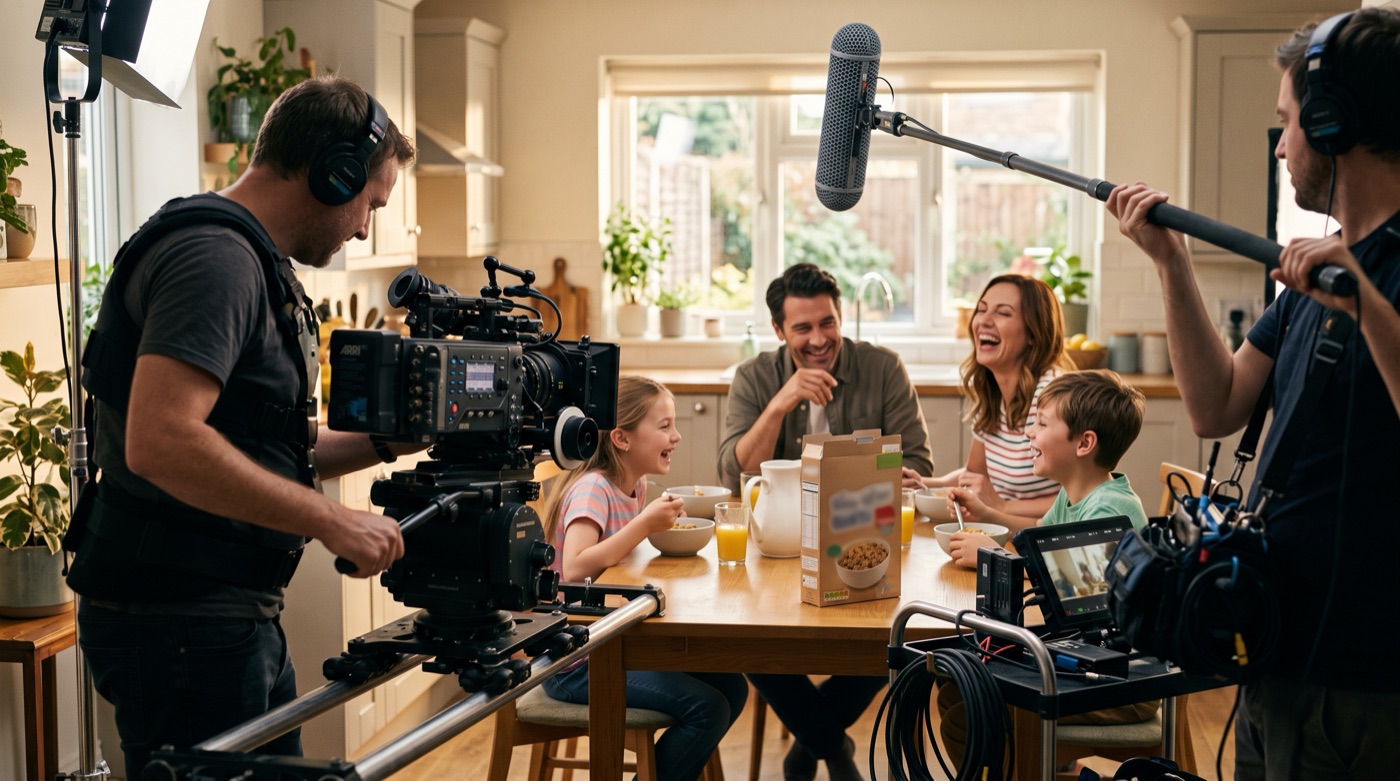
The study found that AI did well with straightforward, product-driven briefs, the kind with a clear problem and a clear solution. Once a brief called for storytelling, emotion or a genuine point of view, AI struggled. Even when viewers could not tell which ad was AI-made, they rated the human versions as more entertaining, more unique and more worth talking about.
One detail stands out. The pairing with the highest combined effectiveness scores was Cheerios, built on the most deeply human brief of the set. The more human the brief, the better the work, whoever made it.
Ryan Barthelmes, senior vice president of creative excellence at Ipsos, concluded that the future is humans and AI working together. Peruta told Campaigns & Elections that advertisers have to go back to how they have been doing it for decades.
One caveat: the study tested the extreme case of handing the whole ad to AI, not the human-and-AI collaboration most brands actually use. What it really shows is which steps cannot be skipped. For how consumers feel about AI advertising more broadly, see our piece on the AI ad trust gap.
Three Places to Keep People in AI Video Ads

1. Brief and insight: start with one human sentence
AI can execute a brief beautifully, but it will not find the insight that makes someone feel something. Before you press generate, write one sentence: who should feel what, and at which moment. If you cannot write it, it is too early to generate.
2. Story and point of view: decide what not to show
AI is very good at producing footage that looks like an ad. A point of view comes from choices. People should decide whose eyes the story is told through, which beat is left open, and which line is better left unsaid. Those decisions are where a brand becomes different from the rest.
3. Review standard: replace "good enough" with "does it work"
The biggest trap with AI video is that every cut is good enough to approve. Add three questions to your review. Do people remember the brand afterward? Is there one moment they would send to a friend? If you swapped in a competitor's logo, would the film still hold up? If the answer to the third is yes, it is not your ad yet.
As a simple division of work:
- AI handles: producing multiple versions quickly, product demonstration and feature-explanation footage, resizing and recutting, and multilingual versions.
- People handle: the insight and the brief, the story and point of view, the final review call, and whether to disclose the use of AI.
Conclusion: AI Makes Video Cheap, Story Makes It Valuable

The most useful thing about this study is not that it proves AI falls short. It shows where the gap is. When every brand can produce a decent-looking video at very low cost, the scarce thing is a story worth remembering. That is what TitApeX means by "AI handles perfection, people handle what moves us."
If you are planning brand video and want to use AI in the right places, see our services or get in touch.
Comments