That Person in the Ad Is Not Real: What New York's Synthetic Performer Law Means for AI Video Ads
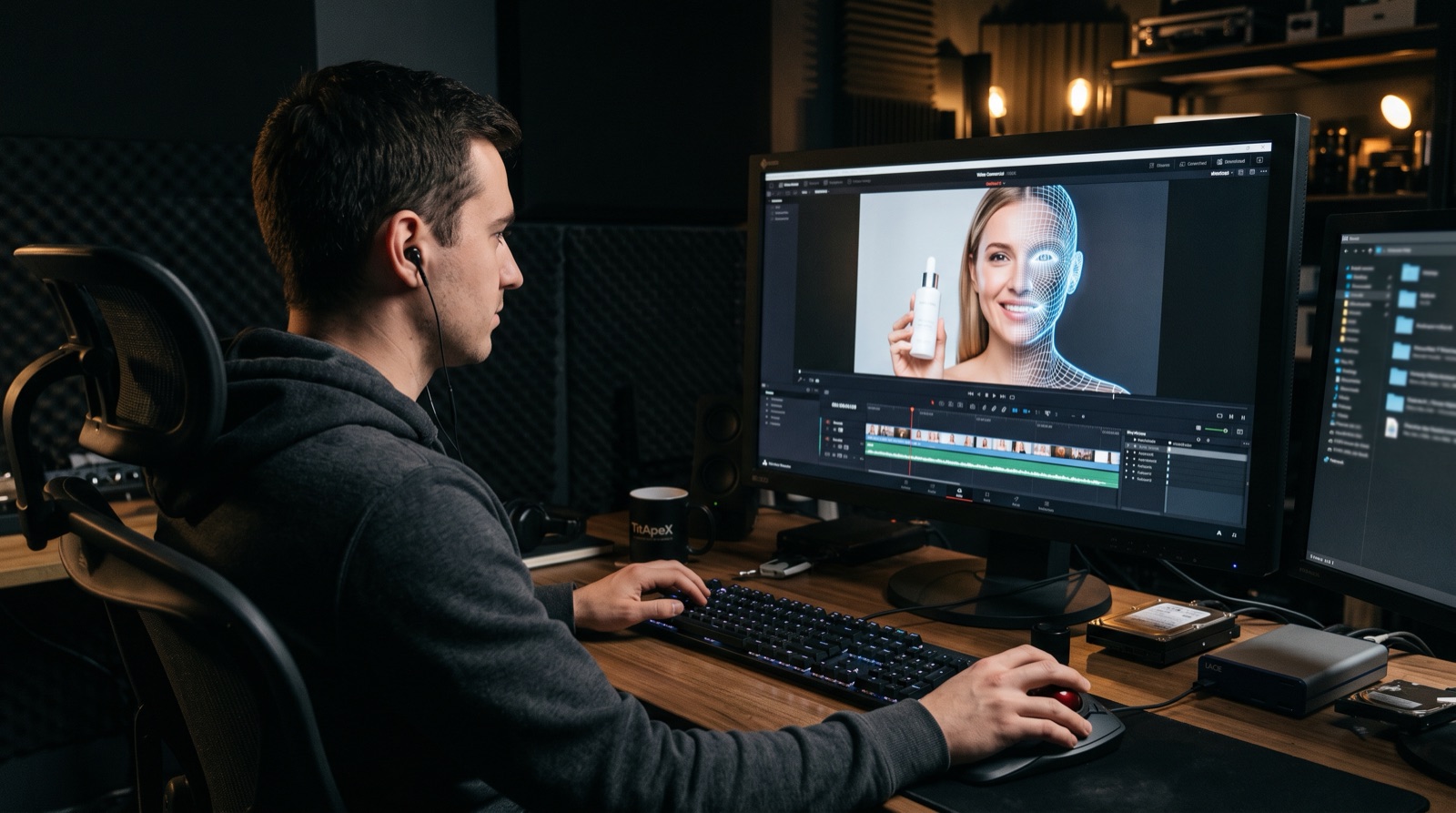
The person smiling at the camera and introducing the product may never have existed. AI video tools can now generate people with natural expressions and fluent delivery, so a brand can have an "actor" without casting or a studio. But since 9 June 2026, running an ad in New York State that features AI synthetic performers without saying so is against the law. It is the first US law requiring disclosure of synthetic performers in advertising. Even if your brand never advertises in New York, it is worth understanding, because it puts a question on the table that every brand will face sooner or later: do viewers have a right to know that the person in front of them is not real?
What the New York law requires
The law (S.8420-A) was signed by the governor on 11 December 2025, took effect on 9 June 2026, and sits in New York's General Business Law § 396-b. According to several law firms' summaries:
- What it covers: ads featuring a "synthetic performer", a digital asset created by generative AI or a software algorithm that gives the impression of a human performance but is not recognisable as any identifiable real person.
- Who is responsible: whoever produces or creates the ad, advertisers and agencies included, provided they have actual knowledge that a synthetic performer appears in it. Media that merely carry the ad are excluded.
- What to do: disclose it "conspicuously" in the ad.
- Penalties: USD 1,000 for a first violation and USD 5,000 for each one after. The statute creates no express private right of action; enforcement is expected to rest with the state attorney general.
The text does not prescribe wording or placement. Law firm McDermott Will & Schulte suggests using the US Federal Trade Commission's "clear and conspicuous" standard as a benchmark: close to the relevant image, prominent enough to be noticed, not buried in fine print or behind a link. The firm also offers sample wording, such as "The performers shown in this ad are computer-generated using AI. They are not real people," while cautioning that no formulation is a safe harbour until the attorney general or a court gives guidance.
Which AI synthetic performers need disclosure, and which do not

The law lists several exemptions:
- Promotion of expressive works. Ads for films, TV series, streaming content and video games need no disclosure when the synthetic performer is used consistently with the work itself.
- Audio-only ads. No picture, no obligation.
- AI used solely for translation. A human performance whose language is converted by AI is not covered. This is the same category as AI dubbing for localisation.
Grey areas remain. Venable notes that the definition appears to exclude AI-enhanced footage of real people, though regulators have not clarified this. McDermott points out that the law does not require a complete human image, so traditional visual effects, or even a single hand, could arguably be caught. These questions will take time to settle.
One more distinction: this law is about people who do not exist. Using AI to copy a real person's face or voice is a matter of likeness rights and licensing. It needs that person's explicit consent and follows a different set of rules.
Four things to do before casting an AI synthetic performer

These draw on Venable's and McDermott's advice to advertisers, and they apply whatever your market:
- Take inventory. List existing and planned videos and mark which include AI-generated people. Many brands discover on their first inventory that the asset library contains footage even they cannot tell apart.
- Write responsibility into contracts. Who flags that a video contains a synthetic person, and who adds the disclosure? Spell it out with agencies, production companies and creators. The legal threshold is actual knowledge, but not asking does not make the risk go away.
- Add a step to review. One more line on the pre-launch checklist: "Does this video contain an AI-generated person? Where is the disclosure?"
- Keep records. Save asset sources, vendor statements and internal review notes, so you can show later what you knew at the time.
This article is a summary of public information, not legal advice. If your ads run in the United States, confirm the details with counsel who know the local rules.
AI performs; people stay honest and make the call

AI synthetic performers solve a production problem: cost, schedule, languages, versions. They do not solve a trust problem.
- AI handles: delivering a consistent performance from a script, producing many versions and formats quickly, adapting to different markets.
- People handle: deciding whether a video should use a virtual person at all, recognising which moments need a real human (a founder's message, a customer testimonial, an apology), making the disclosure natural rather than grudging, and answering for the truth of the content.
Testimonials deserve particular care. Having a person who does not exist say "I used it for three months and it worked" is inventing an experience, labelled or not. Disclosure cannot fix that.
Conclusion: brands that say it first are trusted more

New York is the first, and it will not be the last. Rather than waiting for each market to legislate, a brand can set its own principles now: which content may use AI synthetic performers, how it is labelled, and what always features real people. That matches how TitApeX sees it: "AI handles perfection, people create what moves you", and being moving starts with being honest.
If you are planning AI video and want to think through the production workflow and disclosure principles together, take a look at our services or simply talk to us.
References
- Hunton Andrews Kurth: New York Enacts Law Regulating the Use of AI Generated "Synthetic Performers" in Advertising
- McDermott Will & Schulte: New York's synthetic performer disclosure law: What advertisers need to know
- Venable / GALA (Mondaq): New York AI Advertising Disclosure Requirement Now In Effect
Comments