
Supercar Dealer CRM: Ferrari's Order Book Reaches 2028. How to Build Allocation and Delivery Systems

Ferrari reported its third-quarter results on November 3, and CEO Benedetto Vigna said the order book now reaches into 2028. In the same release, personalization revenue came in stronger than the company had expected. For supercar dealers, those two facts add up to a long and demanding stretch between order and delivery: clients wait a year or two, keep refining their spec, ask where their car is, and ask whether they will be offered the next limited series. A typical dealership CRM is built to turn leads into sales. A supercar dealer CRM has to manage what happens after the sale, and decide who earns the next car. This article looks at how to plan the client, allocation and delivery systems behind a supercar dealership, from a development point of view.
Order Books Into 2028: A Supercar Dealer CRM Manages the Wait

Supercar retail runs in the opposite direction to volume retail. A normal dealer has inventory and needs buyers. A supercar brand deliberately limits production, so the dealer has no spare cars and has to decide who gets the few allocations available.
Ferrari is the clearest example. Citing Ferrari's 2024 annual report, InsideEVs notes that 81% of new cars that year went to existing clients and 48% went to collectors who own more than one Ferrari; the report itself describes a "deliberate allocation strategy." In June, Bloomberg reported that Ferrari's first electric car, the Luce, is being used as a loyalty test for clients. Ferrari did not comment directly, and its official position has always been that allocation rewards long-term relationships.
It is not only an Italian habit. A senior Toyota executive told Motor1 this year that the US will get roughly 200 to 250 GR GTs, prioritized for people known to actually drive their GR cars, using lists curated with factory input instead of a dealer's first-come, first-served list. The point is to keep flippers out.
Now look at where dealer systems stand. In a Spyne survey of 600 US dealerships last October, 81% said they lose customer conversations or leads because their CRM, chat and inventory systems do not talk to each other. Cox Automotive's study published this October found that only 22% of franchise dealers strongly agree their decisions are primarily data-driven. Volume dealers already struggle with this. A supercar dealer has more to track: which cars a client owns, which events they attended, which model they are waiting for, which version of the spec is current. When that lives in salespeople's phones and spreadsheets, allocation comes down to memory.
Allocation Lists: Turn "Who Gets the Car" Into Recorded Rules

Allocation is the most sensitive job in a supercar dealership. Give a car to the wrong person and a loyal client walks away; give it to a flipper and the brand watches its limited model resold at a markup. The system's job is to make that judgment traceable and documented, while a person still makes the final call.
What the client profile should record
- Ownership history: which cars they bought, which they still own, and how soon they sold. A client who keeps cars for years and one who sells after six months should look different on the list.
- Engagement history: attendance at track days, launches, owner gatherings and factory events.
- Service history: whether the car is maintained at authorized locations. This usually lives in the dealer management system (DMS), so it needs an integration.
- Intent history: which models the client has asked about, timing, budget range, and notes from every sales conversation.
Score clients, but don't let the system decide
Many teams start by building a score and ranking clients automatically. Scores are useful for organizing the list, but the decision should stay with the sales manager or brand manager, and the system should record why a client was chosen. The reason is practical: allocations are shaped by factory nominations, regional quotas and clients changing their minds. Hard-coded rules get in the way.
Two pitfalls show up in almost every build. The first is permissions: allocation lists and client notes should not be visible to every salesperson. Access needs to be role-based, with a change log. The second is contract terms. Some brands require that limited models are not resold within a set period, so the system should record whether the agreement was signed and remind the team before it expires. Otherwise the clause is just paper.
Spec Sheets and Build Status: One Source of Truth for Sales, Client and Factory
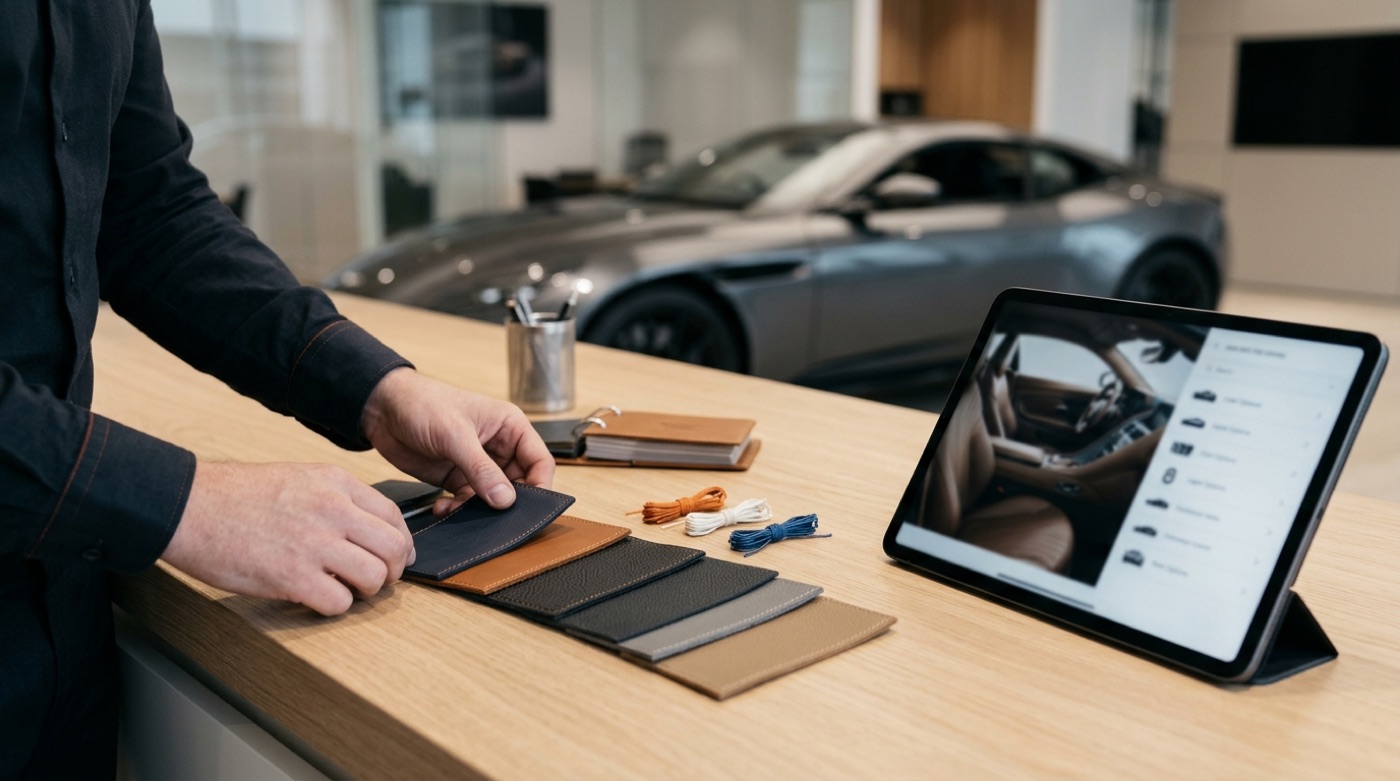
Part of Ferrari's third-quarter growth came from personalization. The more custom options, the easier it is for a spec sheet to go wrong: a client changes the interior stitching color in the showroom, the salesperson writes it in a notebook, and the order sent to the factory is still the old version. By delivery day, it is too late.
Version every spec
Every change should be saved as a new version, recording what changed, who changed it, and when the client confirmed. Lock the version before it goes to the factory, and route later changes through a change request. It is the same idea as version control in software, and once it lives in the CRM, there is a record to check when a dispute comes up.
Give the waiting period some substance
Clients waiting a year or two mostly ask one thing: where is my car? The system can break production into milestones, such as order confirmed, scheduled, in assembly, completed, in transit, arrived, and in preparation, and notify the client at each step with photos or notes the dealer is allowed to share. This can become a private client page or app where each owner sees their own spec and status.
Ideally the spec sheet and the online configurator share the same option data. As we wrote in 3D Car Configurator Development, option rules are harder to build than the 3D visuals. If those rules only live inside the configurator, someone has to retype the spec into the CRM, and that is where errors begin.
Delivery and After: Data Should Feed the Next Allocation

Delivery is the day the client has waited longest for, and it carries the most details: date and venue, documents and payment, registration and insurance, the pre-delivery inspection checklist, who will be present, and whether a photographer is booked. Miss one and the day loses some of its shine.
Delivery scheduling
Delivery scheduling works well as a booking system that puts sales staff, technicians and the handover area on one calendar, so three cars are not booked into a single handover bay on the same afternoon. The booking system we built for TPE Barber serves a very different industry, but the logic of time slots, staff and space is the same.
After delivery
Service reminders, track invitations and owner events after delivery all go back into the client profile and become the basis for the next allocation. That is the biggest difference between a supercar dealer CRM and a standard one. A standard CRM's process ends at the sale. A supercar client's record keeps growing, because the list for the next limited model is drawn from it.
Existing CRM Plus Custom Modules: How to Phase the Build

Most dealers already run a DMS and a CRM and must connect to the manufacturer's ordering system, so few need to start from scratch. The practical approach is to keep existing systems and build the supercar-specific parts as custom modules connected through APIs.
- Audit the data first: where client data lives today, who maintains it, and how much is duplicated. Get this wrong and everything after it is built on bad data.
- Build allocation and spec sheets next: they hurt the most, and they are what off-the-shelf CRMs handle worst.
- Then the client-facing layer: status updates, spec viewing, delivery booking.
- Analytics last: only after data has built up can you see which clients are active and which models draw the most interest.
In Cox's study, 42% of data-driven dealers check whether a new tool improves data quality before signing, versus 22% of other dealers, and they are also more likely to set success metrics before rollout. The same order applies to custom development: define the problem and how you will measure it before writing code.
Two more topics belong in the first conversation. One is data ownership: whose servers hold the client data, and whether it can be exported in full when the contract ends. The other is privacy. Supercar clients are mostly high-net-worth individuals, and a breach costs far more than it would with ordinary consumers, so access control, encryption and audit logs belong in the spec. AI tools can help summarize call notes or remind salespeople to follow up, but they are one part of the system. Allocation decisions still belong to people.
Conclusion

A supercar dealership runs on long relationships, and the system's job is to keep a complete record of them: what the client bought, what they are waiting for, which version of the spec is current, when the car is handed over, and what they took part in afterwards. With that data connected, allocation has a basis, and clients know they are remembered while they wait.
TitApeX builds client systems, booking tools and 3D interactive websites for high-end brands, and can add custom modules on top of an existing CRM and DMS. If you are planning a dealership or allocation system, take a look at our custom software development services or get in touch to talk it through.
References
- Ferrari: Strong mix and personalizations sustain Q3 growth and further 2026 guidance upgrade (November 3, 2026)
- InsideEVs: Ferrari Luce EV allocation and collectors (June 2026)
- Motor1: Toyota GR GT Supercar For The US Is Already Sold Out On Purpose
- Digital Dealer: 81% of Dealerships Lose Leads to Disconnected Systems, Study Finds (December 2025)
- Cox Automotive: 2026 Dealer Success Study (October 2026)
Comments