Built It With AI? When Vibe-Coded Tools Should Move to Professional Development

A marketer builds an event sign-up page in Lovable in an afternoon. A sales manager pieces together a client-tracking form in Replit. An operations team asks AI to write a small inventory tool. In 2026 these scenes are everywhere. Vibe coding tools let people who cannot code build working apps through conversation, and that is a genuine productivity revolution. But "it works" and "it can run safely for the long term" are two different things. When these tools start handling customer data, connecting to company systems and becoming something more people depend on, business owners need to ask: when should a tool move from "something we built ourselves" to "a professionally developed production system"?
The vibe coding boom: everyone can build an app

Vibe coding platforms are growing at remarkable speed. Sweden's Lovable closed a US$400 million Series C in August 2026 at a US$13.3 billion valuation, and says it hosts 60 million projects with around 900 million monthly visits. Replit, Bolt and others keep adding enterprise features; in September 2026 Replit expanded its enterprise audit logs by more than 65 event types covering projects, deployments, permissions, secrets and AI Agent activity.
That tells us two things. First, building tools with AI is now a mainstream way of working, not an experiment for a few engineers. Second, even the platforms recognize that businesses need more governance and auditability.
The hidden costs: security, data and accountability

With quickly built tools, the typical problems are not on the screen but in the parts nobody sees. A Cloud Security Alliance research note from April 2026 gathered several numbers worth noting:
- Veracode testing found that 45% of AI-generated code samples introduced OWASP Top 10 vulnerabilities.
- Escape.tech found more than 2,000 critical vulnerabilities in production apps built on vibe coding platforms, including over 400 leaked secrets and 175 instances of exposed personal data.
- Roughly one in five AI-generated code samples referenced packages that do not exist, giving attackers a chance to register malicious packages under those names.
Platforms have had issues too: in March 2025, security researchers found improper database access controls on some Lovable-built sites. A Retool article cites a survey of 307 technical leaders in which 22% of organizations had a production incident caused by an AI-generated internal tool in the past year, another 51% could not say for sure, and only 5% of leaders reported full visibility into every internal tool running in production.
The problem is often not that the tool is badly made. It is that nobody knows it exists and nobody owns it.
When to hand vibe coding tools to professional developers: five signals

Not every AI-built tool needs a rewrite. One-off campaign pages, personal calculators and team prototypes are perfectly reasonable uses of vibe coding. But if any of the following signals appears, it is time to seriously consider bringing in a professional team:
- It starts handling personal data or payments: once customer lists, orders or payment details come in, security and regulatory responsibility come with them.
- It connects to core systems: credentials and API keys for your ERP, CRM or accounting system should not be scattered across code nobody has reviewed.
- More than one team depends on it: when it breaks, the impact is no longer on the person who built it but on the whole department.
- The builder is leaving or changing roles: a tool with no documentation and no handover is textbook technical debt.
- It needs continuous changes and extensions: asking AI for patch after patch only makes the code harder to maintain.
This follows the same logic as Custom software or SaaS? How business owners should decide in 2026: what matters is not how the tool was made, but how important it is to the business and how long it needs to last.
From prototype to production: a practical upgrade path

The good news is that a vibe-coded prototype is not wasted effort. It is often the best requirements document you could have. A practical upgrade path looks like this:
- Inventory: list the AI-built tools in the company, who uses them and what data they touch.
- Tier: sort them into "leave as is," "manage more closely" and "rebuild properly" based on data sensitivity and impact.
- Keep the prototype as the spec: it has already validated the flow and the screens, so a professional team can use it as a blueprint and cut communication time.
- Add the invisible parts: access control, backups, error monitoring, audit trails and security review are where a production system earns its value.
- Set guidelines: define where people are free to build with AI and where review is required, so innovation and governance can coexist.
Conclusion: let AI accelerate ideas, let professionals hold the line
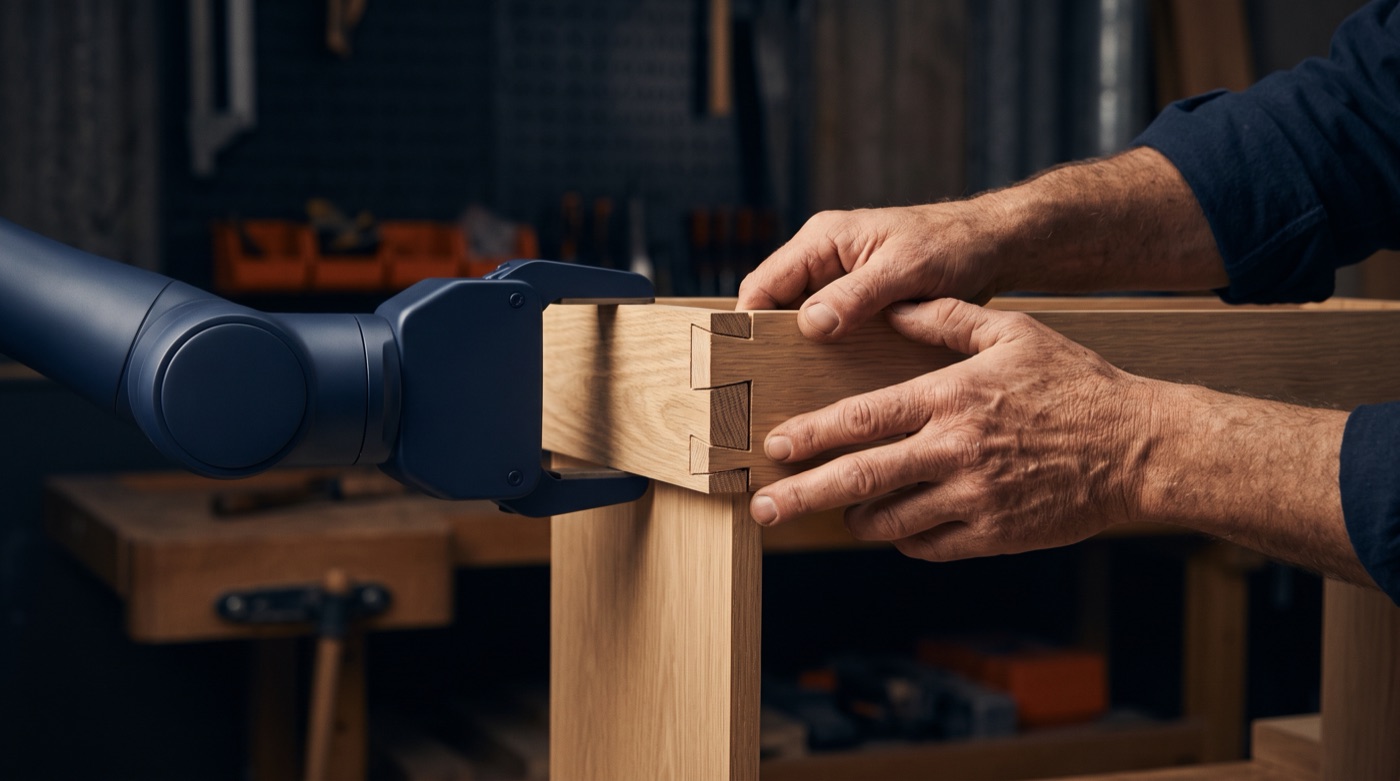
The greatest value of vibe coding is shrinking the distance from idea to prototype to a single afternoon. Every business should embrace that. But once a prototype starts carrying customers, data and revenue, it needs more than "it runs." It needs to be designed, tested and owned. AI turns ideas into shape quickly; people make systems worth trusting.
If your team has already built useful tools with AI and wants to assess which ones to upgrade and how, take a look at TitApeX services or get in touch.
Comments