
Exotic Car Dealer Website: 79% of Collector Cars Now Sell Online. 4 Lessons for 2026

In June 2026, 79% of the collector cars sold in the US changed hands through online auctions, and half of the month's ten most expensive sales happened online, including a Rimac Nevera that sold on Bring a Trailer for $1.677 million. Seven-figure buyers are bidding on cars they have never touched, based on photos, video and a comment thread. For dealers in pre-owned supercars, limited editions and collector cars, the message is clear: buyers are willing to make big decisions online. The question is whether they will make them on your site. This article looks at exotic car dealer website design from a marketing and development angle, and at four things dealers can learn from online auctions.
79% of Collector Cars Sold Online: Your Exotic Car Dealer Website Competes With Auction Platforms

June was not a one-off. Hagerty's annual analysis found that online auctions sold more than 50,000 collector vehicles in 2025, up 6% year over year, while live auctions held flat at around 21,000. By value, online auctions reached $2.5 billion in 2025, ahead of the $2.3 billion sold at traditional auctions. Bring a Trailer alone closed more than $1.7 billion in sales in 2025 and reached 1.65 million registered users.
The cars are changing too. Kenneth Ahn, president of Hagerty Marketplace and Broad Arrow Auctions, noted that the average age of seven-figure cars sold at auction has become nearly 12 years newer over the past five years, as demand moves from 1950s and 1960s sports cars toward 1990s-and-later supercars and "youngtimers." That is exactly the inventory many exotic dealers hold.
So an exotic car dealer website is no longer compared only with the dealer down the road. It is compared with the auction listings buyers browse every day: hundreds of photos, cold-start videos, full service records and a long thread of knowledgeable questions. A site with six showroom photos and "price on request" sends buyers straight back to the auction platforms to compare.
The Vehicle Page Is the Showroom: Treat Photos, Video and History as Data
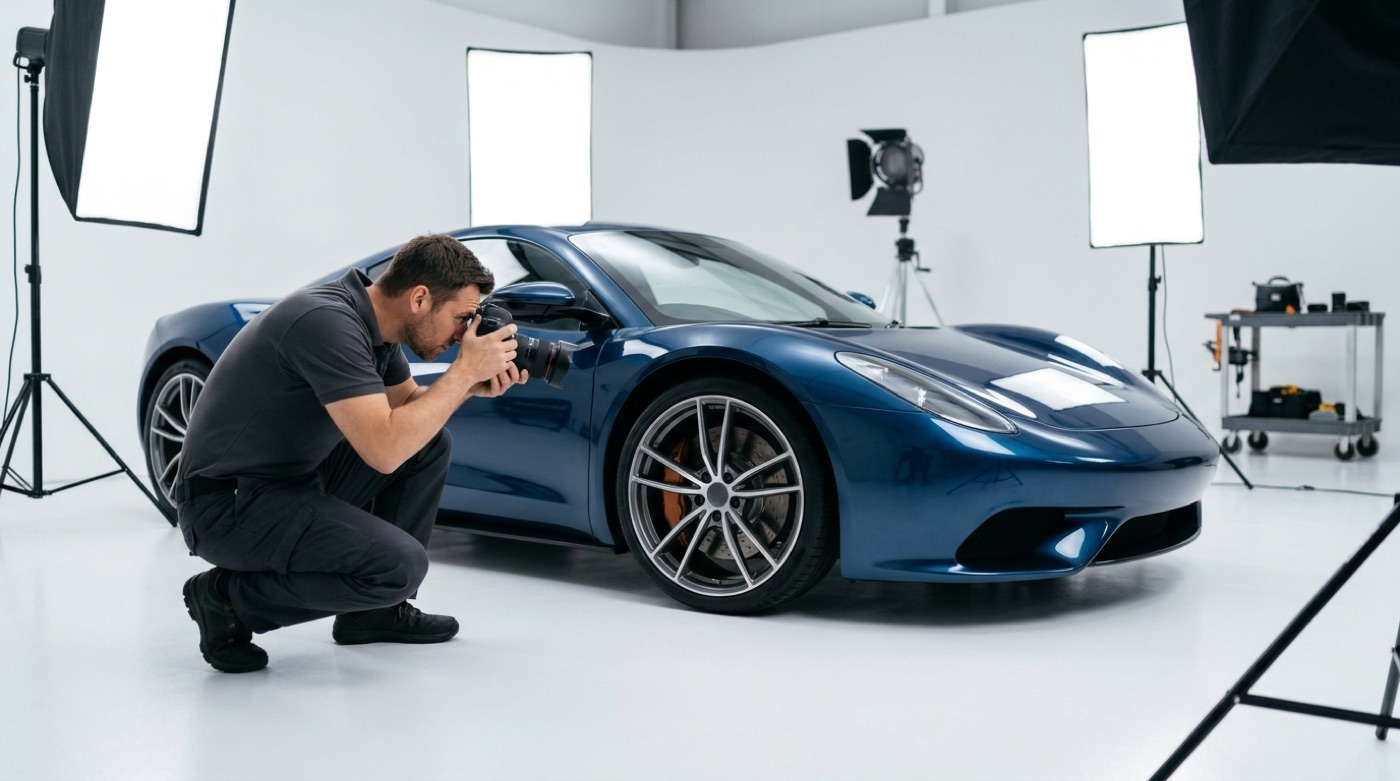
Online auctions make remote bidding possible through sheer depth of information. A dealer's vehicle detail page (VDP) can do the same, as long as the build treats content as structured data rather than hand-laid pages:
- A fixed shot list: every car is photographed to the same list, covering exterior angles, wheels and calipers, interior stitching, carbon parts, engine bay, underside and odometer. A fixed list lets buyers compare two cars and lets the back end sort images by angle automatically.
- Video in segments: cold start, idle sound, driving footage and underside inspection as short clips with timestamps, so buyers on a phone can jump to the part they care about.
- Structured history documents: factory option sheets, service records, manuals and key count, and factory certification, scanned and filed by category, with key fields (delivery date, number of services, last major service) stored in the database and shown as a timeline on the page.
- One record, many outputs: the same inventory record generates the vehicle page, filtered listings, language versions and structured markup search engines can read. Change it once and the whole site updates.
Brands selling new or configurable cars can add 3D or interactive views, which we covered in 3D car configurator development. For pre-owned and collector cars, the budget usually works harder in photography and documentation.
Public Q&A and Sold Records: Trade Transparency for Trust
Bring a Trailer co-founder Randy Nonnenberg describes the site's comments as an open microphone where people share their expertise and opinions freely. James Turner, founder of UK partner Sports Purpose, says the mix of car sales and knowledgeable public comment is what builds buyer confidence.
Dealers do not have to open a comment section, but they can bring the same logic to their own site:
- Public Q&A on each vehicle page: questions buyers have asked (any paint correction, clutch life, accident history) are answered by sales staff and, with consent, published on the page. The next buyer does not need to ask again, and sales staff answer fewer repeat emails.
- Third-party inspection reports: commission an independent pre-purchase inspection and publish the report. Willingness to publish says the car can stand scrutiny.
- Keep sold pages: when a car sells, switch the page to "sold" instead of deleting it, keeping photos and specs. These pages keep earning search traffic and show the next buyer which cars you have handled.
Whether to publish prices is a call every dealer has to make. "Price on request" is understandable for limited or auction-grade cars, but at least state what information requires an inquiry and how quickly you reply.
International Buyers: Languages, Currencies and Remote Viewings

Supercar buyers have always been spread across countries. Bring a Trailer's top sales outside the US in 2025 were in Germany, France, the UK and Switzerland. In March 2026 it formally launched in the UK, pricing in pounds, converting currency for UK and European bidders, and relying on local partner workshops for inspection and photography.
For a dealer website, going international means more than translation:
- Build languages into the data layer: specs, option names and condition notes stored per language, with each language on its own URL and hreflang tags, so search engines serve the right page to the right buyer.
- Be clear about currency and costs: show reference conversions and explain roughly how export paperwork, shipping and insurance work. Buyers fear the costs they cannot see.
- Bookable remote viewings: let buyers book a video viewing from the vehicle page, with slots shown in their own time zone, and have sales staff walk them around the car on a tablet. It beats a week of email back-and-forth.
After the Inquiry: Keep the Website, CRM and Sales Team Connected
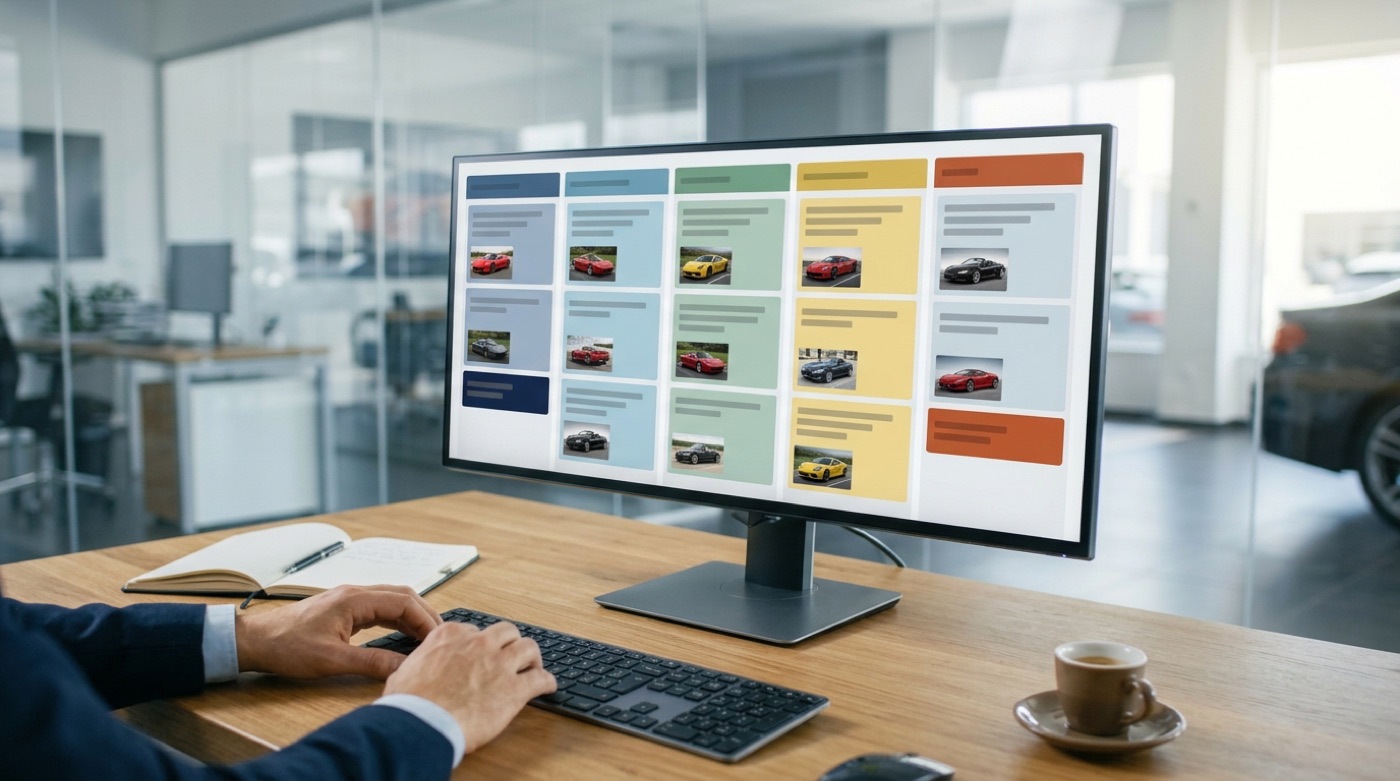
When a buyer finally submits an inquiry, the most common failures begin. Pied Piper's 2026 mystery-shop study of 3,290 US dealership websites found the industry average response score rose to 71 out of 100, and dealers following up by both phone and text rose from 49% to 62%. But the report also warns that automated replies and AI tools make a fast first response easy while hiding breakdowns between systems: data that never moves between the website, CRM and inventory system, or complex questions handed to staff that nobody picks up.
The study covers mainstream franchise dealers. Exotic dealers see far fewer inquiries, but each is worth far more, so a single dropped lead costs more. At minimum, plan for:
- Inquiries that carry context into the CRM: which cars the buyer viewed, which language version and which campaign they came from, so sales staff do not have to ask again.
- Routing rules and response deadlines in the system: assign salespeople by model, language or region, and alert a manager when a deadline passes.
- Measure more than form fills: booked viewings, video walkarounds and document downloads are buying signals too. Track them together to see what the site really brings in.
Off-the-shelf dealer website platforms usually cover inventory pages and forms, but multilingual international flows, document timelines, public Q&A and integration with an existing CRM often require custom software development to do properly.
Conclusion
Online auctions have proved that with complete information and a transparent process, buyers will purchase seven-figure cars online. An exotic car dealer website needs to offer the same conditions, so buyers finish their research on your pages and close the deal with your team. TitApeX helps high-end brands plan and build websites, inventory and inquiry systems, and interactive showcases like APEX LAB, where visitors drag to rotate and scroll to take a car apart. If you are rethinking your dealer website, let's talk.
References
- Fox News: Collector car market being reshaped by new generation as online auctions surge (2026-01-08, citing Hagerty analysis)
- Motorious: Hagerty Sees Continued Momentum in Classic-Car Market Heading Into 2026 (2026-01-06)
- CLASSIC.COM: Market Report: June 2026 (2026-07-03)
- The Shop Magazine: Bring a Trailer Sees Record Growth In 2025 With Over $1.7B in Sales (2026-02-19)
- The Shop Magazine: Bring a Trailer Expands Its Collector Car Auction Platform Into the UK (2026-03-25)
- Car Dealership Guy: Dealers are responding faster than ever to web leads, but automation risks linger (2026-02-24, Pied Piper 2026 ILE study)
Comments