Fewer Clicks, Bigger Stakes: Why Being Cited Is the New Ranking in AI Search
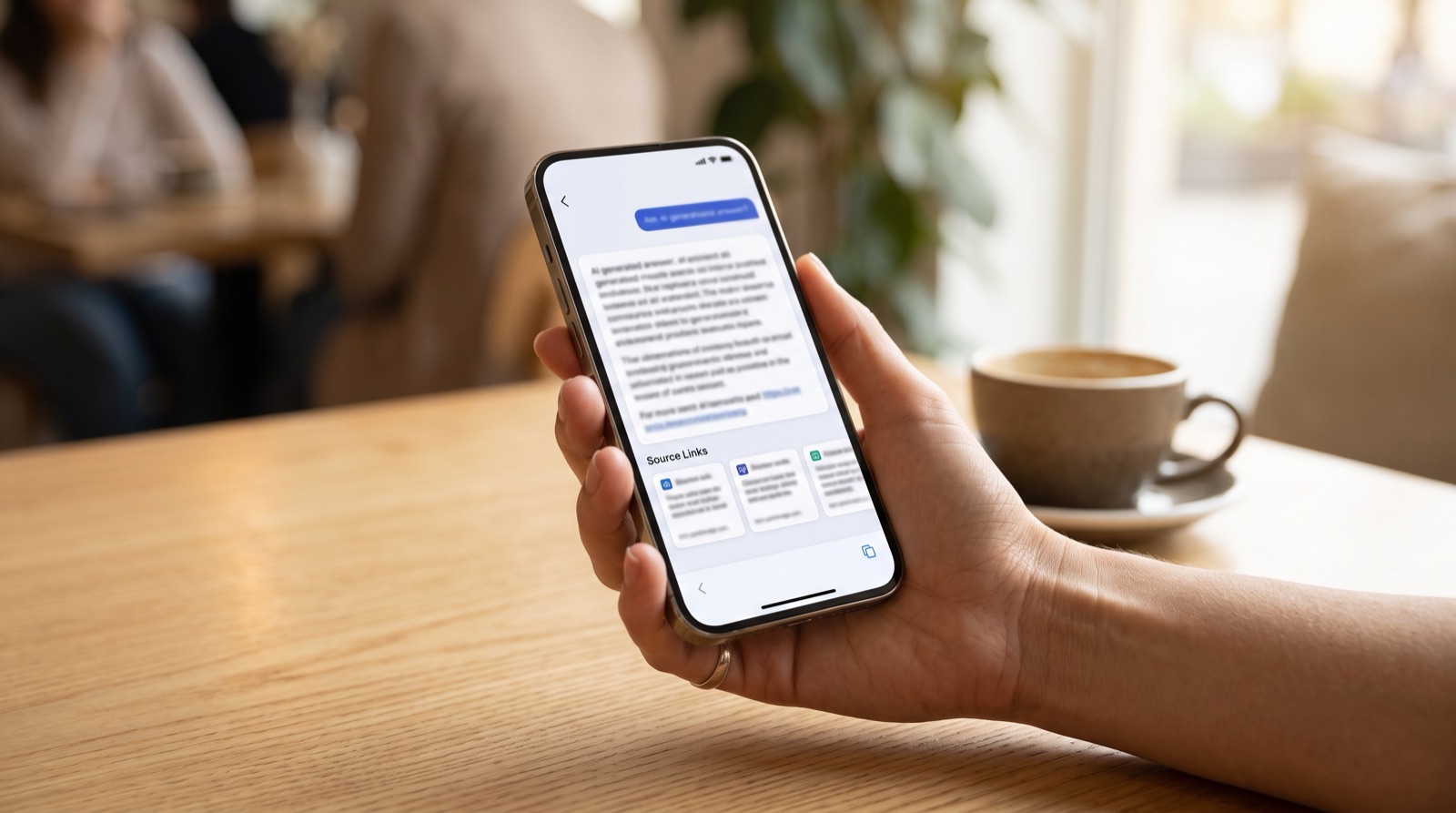
You may have noticed it already: your rankings held, but your traffic did not. The cause is usually not you. It is the block at the top of the results page, an answer written by AI that many people read and then leave without scrolling. That changes the basic math of marketing. The contest used to be about position. Now it is about whether the AI mentions you when it answers. AI search visibility is the new battleground, and the latest data shows the gap between cited and uncited brands widening.
Clicks Are Down, but Cited Brands Keep More of Them

Digital agency Seer Interactive tracked 3,119 informational search terms across 42 organizations from June 2024 through September 2025. The findings are blunt:
- On queries that show an AI Overview, organic click-through rate fell from 1.76% to 0.61%, a drop of about 61%.
- On those same queries, brands cited in the overview earned an organic CTR of 0.70% against 0.52% for brands that were not, roughly 35% higher.
- The paid gap is wider: 7.89% for cited brands against 4.14% for uncited ones, about 91% higher.
Seer itself cautions that this is correlation, not proof of cause. Brands with more authority may simply be both more likely to be cited and more likely to be clicked. The direction is still clear. On a page with an AI answer, being mentioned and not being mentioned are two different situations.
AI Search Visibility Today: Small Traffic, Strong Intent
Do not move the whole budget yet. Conductor's 2026 AEO / GEO Benchmarks Report analyzed 13,770 domains and found:
- Referrals from AI tools average just 1.08% of total website traffic. Even the leading sector, information technology, sits at 2.8%.
- About 87.4% of that AI referral traffic comes from ChatGPT.
- Of 21.9 million Google searches, roughly 25% produced an AI Overview, with health care highest at nearly half.
The share is small, but the people asking are more serious. Figures cited by HubSpot put the average traditional search at 3.37 words and the average ChatGPT prompt at 23 words. Users spell out budget, context and constraints in one go. Someone who finds you through AI has often thought it through and is closer to a decision.
Four Things That Make AI Willing to Cite You

There is no published formula for who gets cited, but the reports point to consistent practices:
- Answer first, explain second. The first sentence under each heading should answer the question directly. AI lifts passages that stand on their own.
- Keep brand facts consistent everywhere. Company name, services, price range and location should read the same on your site, social profiles, business listings and third-party platforms. Conflicting facts make a brand risky to cite.
- Answer specific questions. "Which CRM suits a ten-person sales team" beats "CRM for small business." The more specific the question, the better the odds.
- Add structured data. Mark up organization, product, service and FAQ content with schema so machines do not have to guess.
This is the other side of what we covered in Can AI read your brand guidelines?: a brand has to be readable by machines before it can be recommended by them.
Change How You Measure: From Rankings to Mentions

If the monthly report still shows only keyword rankings and organic traffic, you will keep seeing bad news without seeing what is really happening. Add three measures:
- Citations and mentions. Regularly put your customers' real questions to ChatGPT, Gemini, Perplexity and Google, and record whether your brand appears and how it is described.
- Competitor comparison. For the same questions, who is mentioned and where are you absent?
- Conversion from AI referrals. Low volume is fine. Break it out as its own source and look at the quality of the deals.
That question list should come from real support tickets and sales conversations, not from a keyword tool.
Conclusion: AI Assembles the Answer, People Supply What Is Worth Citing

Format, structure and consistency can all be made perfect with process and tools. What AI ultimately cites is something nobody else has: first-hand experience, your own test data, a clear point of view. Neatly organized second-hand information is something AI can write by itself, with no need to cite you. The division of labor follows: AI takes care of perfect, people take care of moving. Being easy for machines to read is the baseline. Being worth citing is the real work of a brand.
To see how your brand currently appears in AI search, or to rework your site's content and structure, explore TitApeX's services or contact us.
Comments