Online Cools, the Room Heats Up: How Gallery AI Prepares Every Collector Meeting
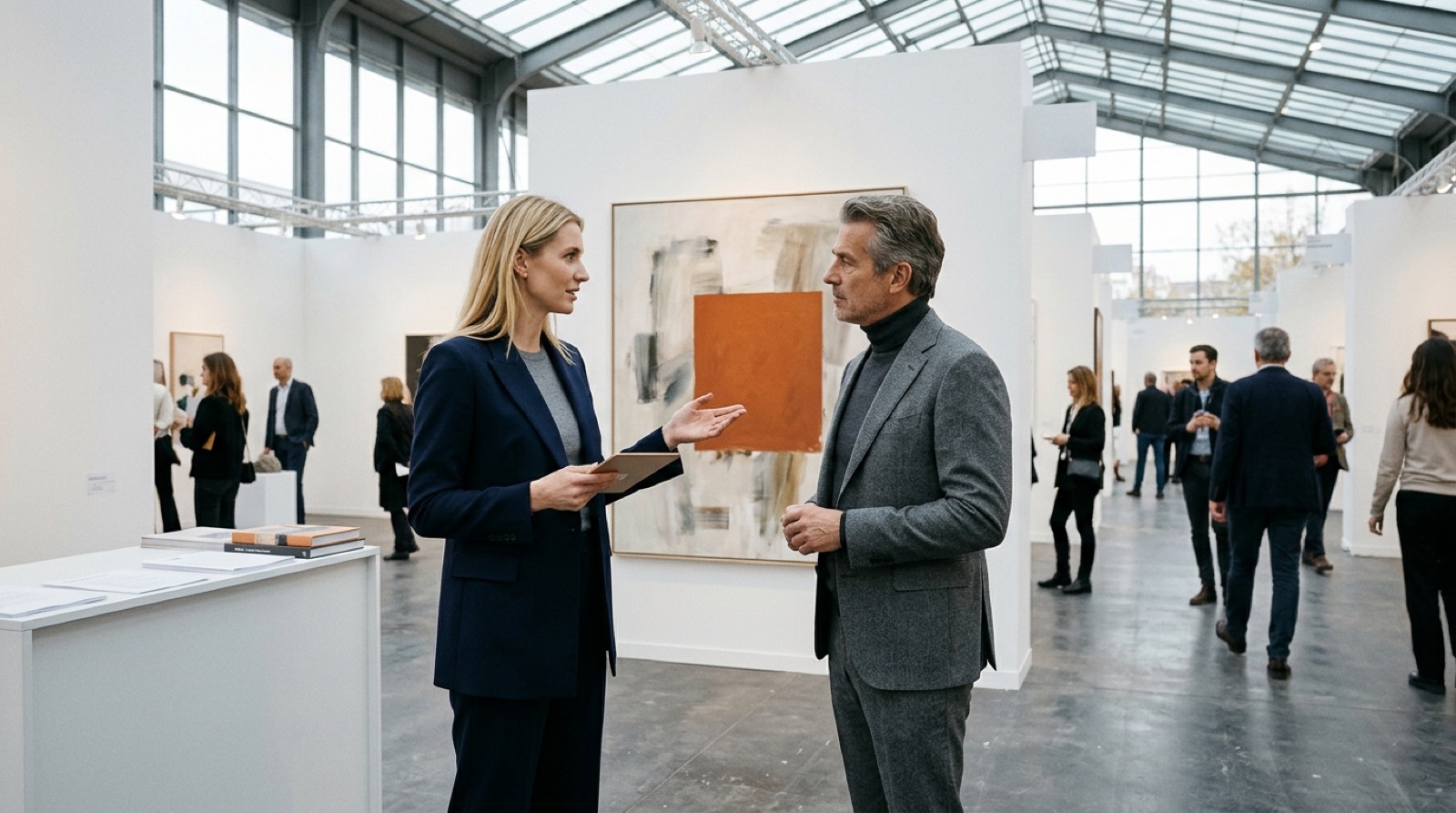
During the pandemic in 2020, online sales briefly reached 25% of the global art market. By 2025, after three straight years of decline, that share had fallen to 15%. The highest-value works are once again changing hands at fairs, in galleries and in artists' studios. Digital tools still matter, but their job has changed: the value of gallery AI is no longer selling work online. It is making every in-person meeting better prepared. Drawing on the latest Art Basel and UBS research and this week's Art Basel Paris, this article looks at how AI automation helps galleries and art advisors position themselves more precisely, and which parts of the job must stay entirely human.
Online Sales Cool Off, and Top-Tier Deals Return to the Room
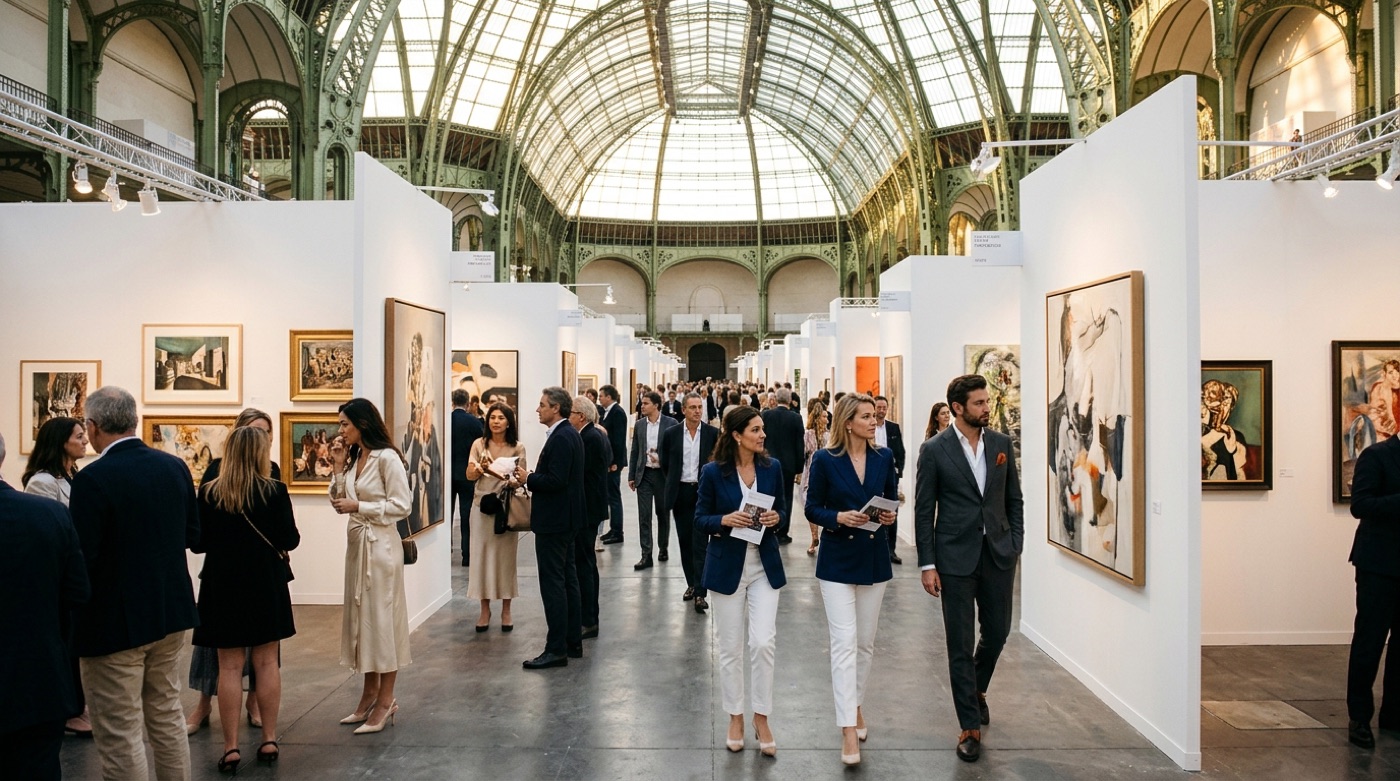
An Art Basel market feature published in August, citing The Art Basel & UBS Art Market Report, notes that online sales made up just 15% of the market in 2025, the third consecutive annual decline, and that the highest-value transactions have returned to in-person settings. The same analysis points out that in the Survey of Global Collecting, only 24% of high-net-worth collectors named financial investment as their single most important motivation. Roughly three-quarters ranked something else first, such as personal pleasure or social reasons.
The shift in collecting behavior is even more telling. In the 2025 collector survey, artist studio visits saw a larger rise in attendance than any other art event. Buying directly from artists, through studio visits, social media messages or commissions, grew to 20% of collector spending. In other words, collectors want more than a work. They want an experience: meeting the artist, hearing the story behind the piece, and being treated as someone who knows the field.
The New Job for Gallery AI: Prepare Every Meeting
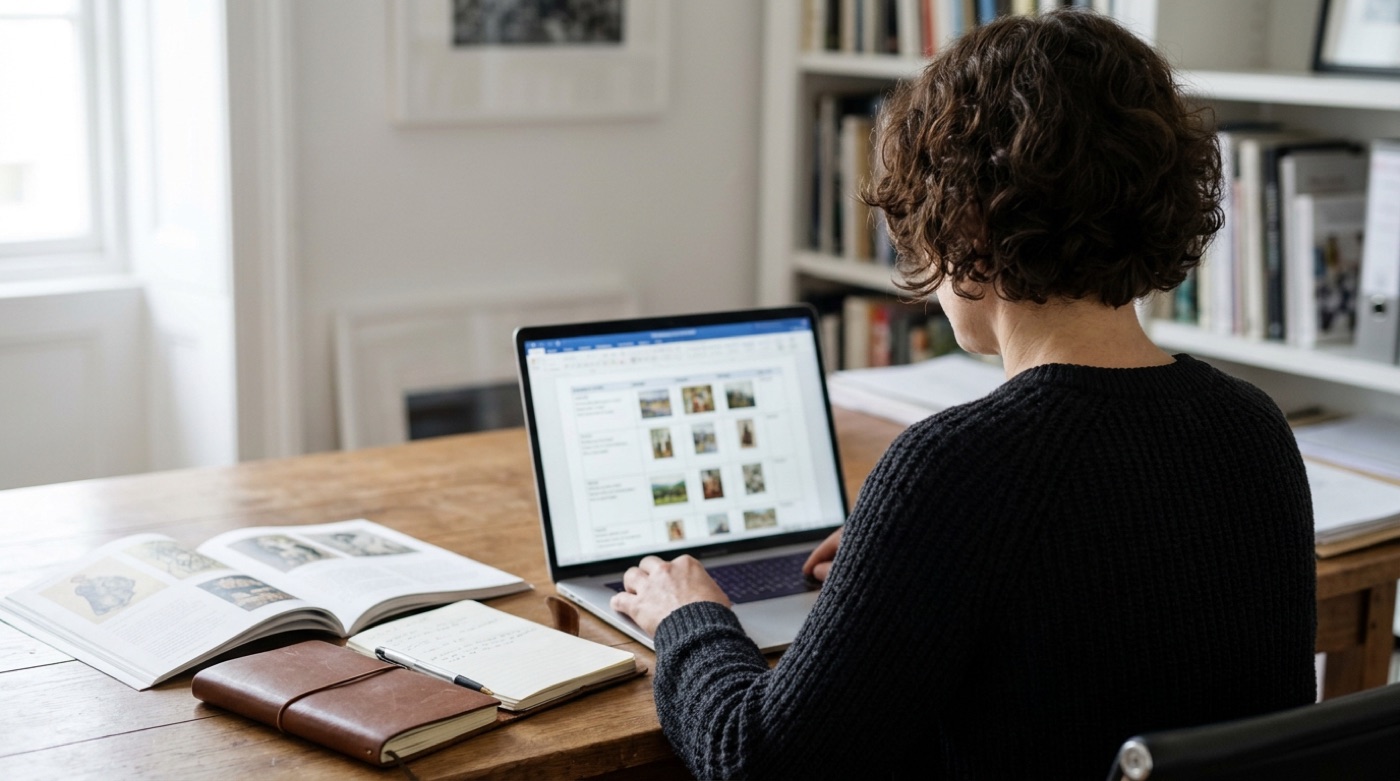
When deals move back into the room, the scarcest resource for a gallery's sales team is time. A fair lasts a few days, and a collector may spend only minutes at a booth. AI is best used to do the homework before and after those meetings.
1. Before the fair: who gets a preview, who gets a private slot
Using past inquiries, purchases, fair attendance and the artists each collector follows, AI can draft a pre-fair list: which collectors should receive previews before opening, which should be invited to see works privately during VIP hours, and who may be interested in a studio visit. The list does not decide for the sales team. It helps them spend limited time on the right people.
2. During the fair: turning conversations into records
Conversations at a fair are fast and many, and business cards and notes end up scattered. Using AI to turn a salesperson's spoken notes into structured records, such as which works a collector viewed, which sizes or media they responded to and what collecting directions they mentioned, means the team leaves with more than vague impressions.
3. After the fair: personal follow-up, not mass email
The week or two after a fair often decides whether a sale happens. AI can draft a different follow-up for each collector: exhibition history and catalogue details for seasoned collectors, an introduction to the artist for newer ones, and descriptions in several languages. The salesperson then adjusts the tone and decides whether and when to send.
A Fair in Turbulent Times: When Collectors Cannot Come
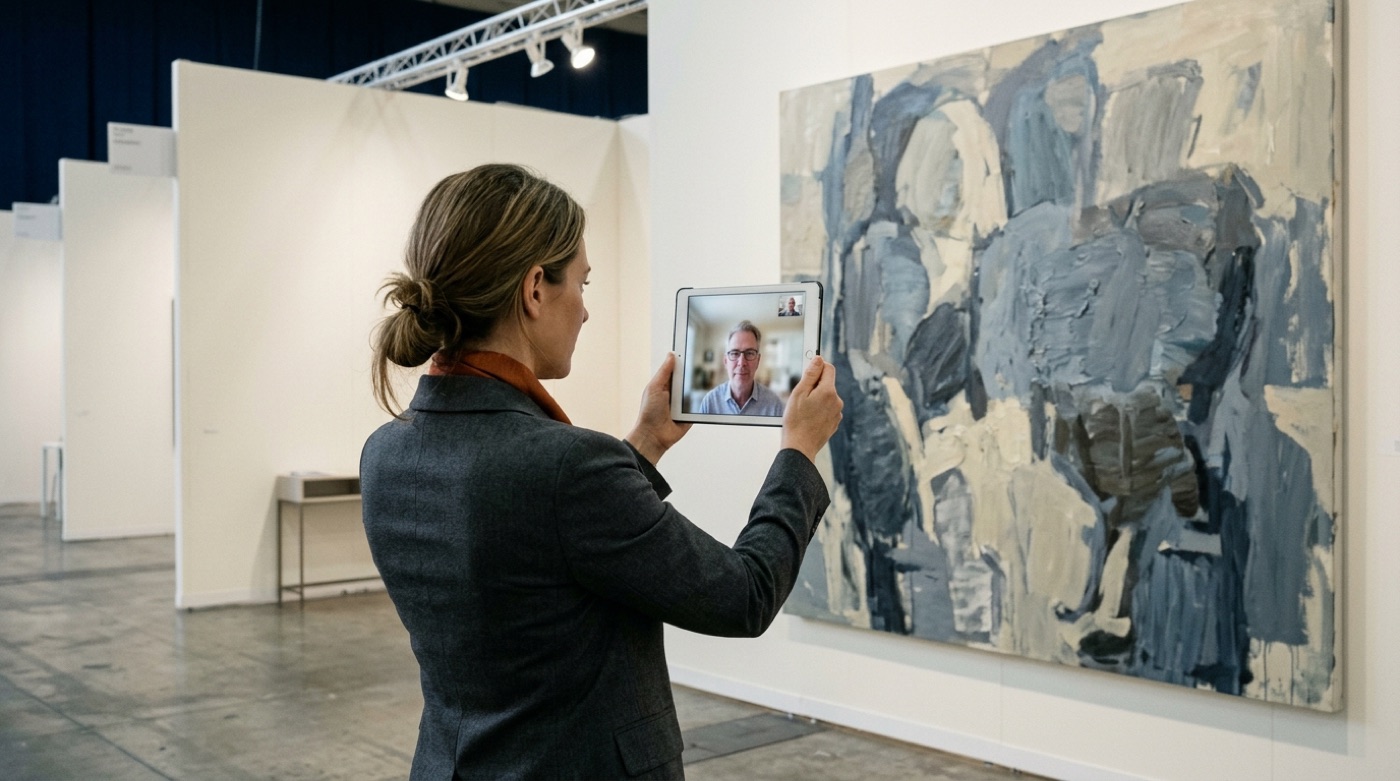
This October's Art Basel Paris made the point clearly. The Art Newspaper reported that violent protests broke out in Paris the week before the fair, security around the Grand Palais was stepped up, and some collectors stayed away. Even so, major works sold in the opening days. Hauser & Wirth, for example, sold a 1965 Gerhard Richter painting for $10.5 million during the VIP preview.
Two lessons follow. First, top collectors' appetite to buy did not disappear because of outside turmoil. Second, some collectors will always be unable to attend because of safety, schedules or privacy. For them, galleries need a way to see the work clearly from afar: high-quality images with a sense of scale, live private video walkthroughs, and well-organized catalogue and condition information. AI helps with the preparation and paperwork, so the salesperson on the video call can give the same focused attention they would in person.
What AI Cannot Replace: Experience, Trust and Placing the Work Well
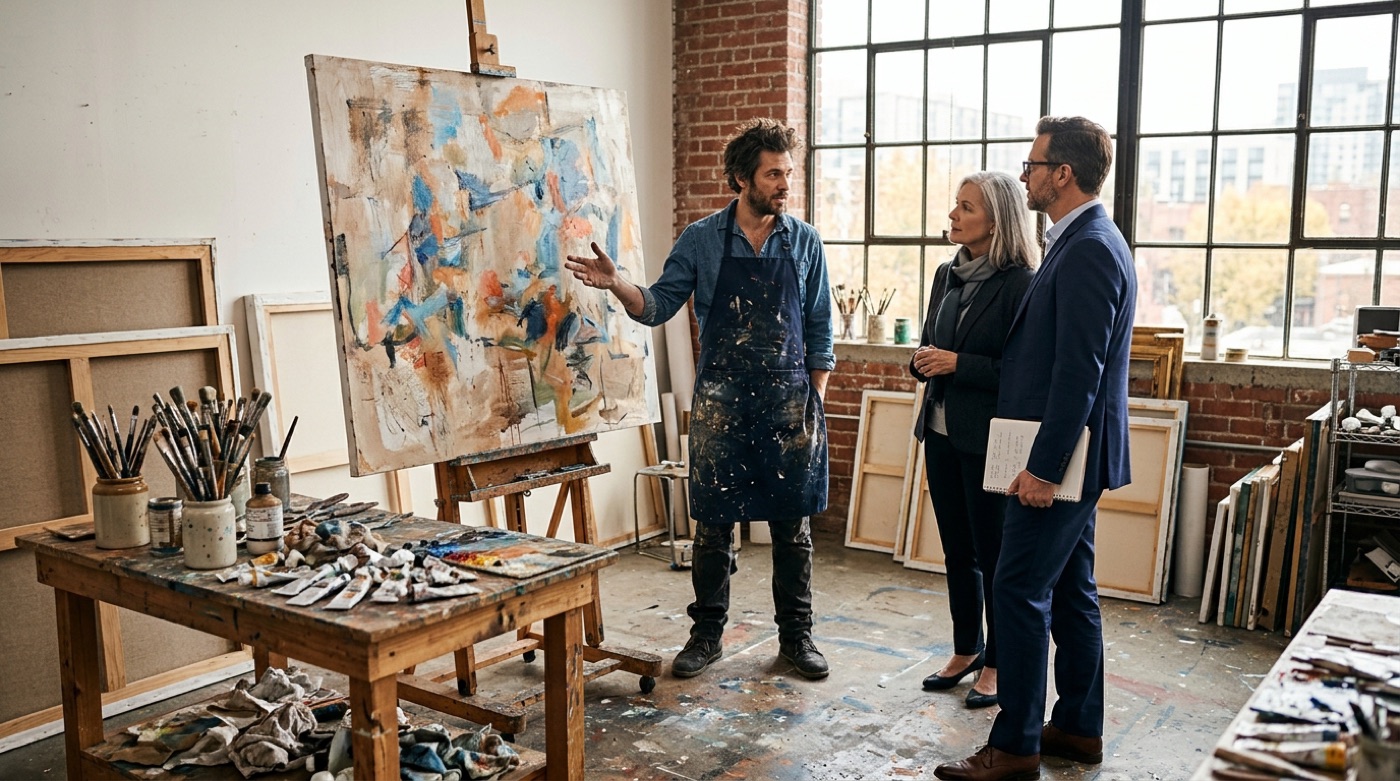
The collector research is clear that wealthy collectors increasingly value the experience over the transaction. That is exactly where AI falls short.
- Studio visits and artist relationships: Introducing a collector to an artist requires understanding both personalities and rhythms, and it requires the artist's trust. That is a relationship asset built over years.
- Curatorial judgment and taste: Which work hangs in the best spot on the booth, and which collector deserves priority on an important piece, shapes an artist's long-term market. That is a curatorial decision, not an algorithmic ranking.
- Negotiation and closing: Top-tier deals often involve installments, holds, first refusal and private terms. Every word needs care.
- Privacy and discretion: Many collectors do not want to be treated as a row in a database. People must set the limits on what is recorded, what is not, and who can see it.
The division of labor in short:
- AI handles: organizing collector records and price data, drafting pre-fair lists, turning fair conversations into notes, drafting multilingual follow-ups, and preparing remote viewing packs.
- People handle: deciding who to meet, how and which work goes to whom; walking collectors into the studio; negotiating price and terms; and protecting collectors' privacy and trust.
Conclusion: Let Technology Prepare, Let People Move Hearts
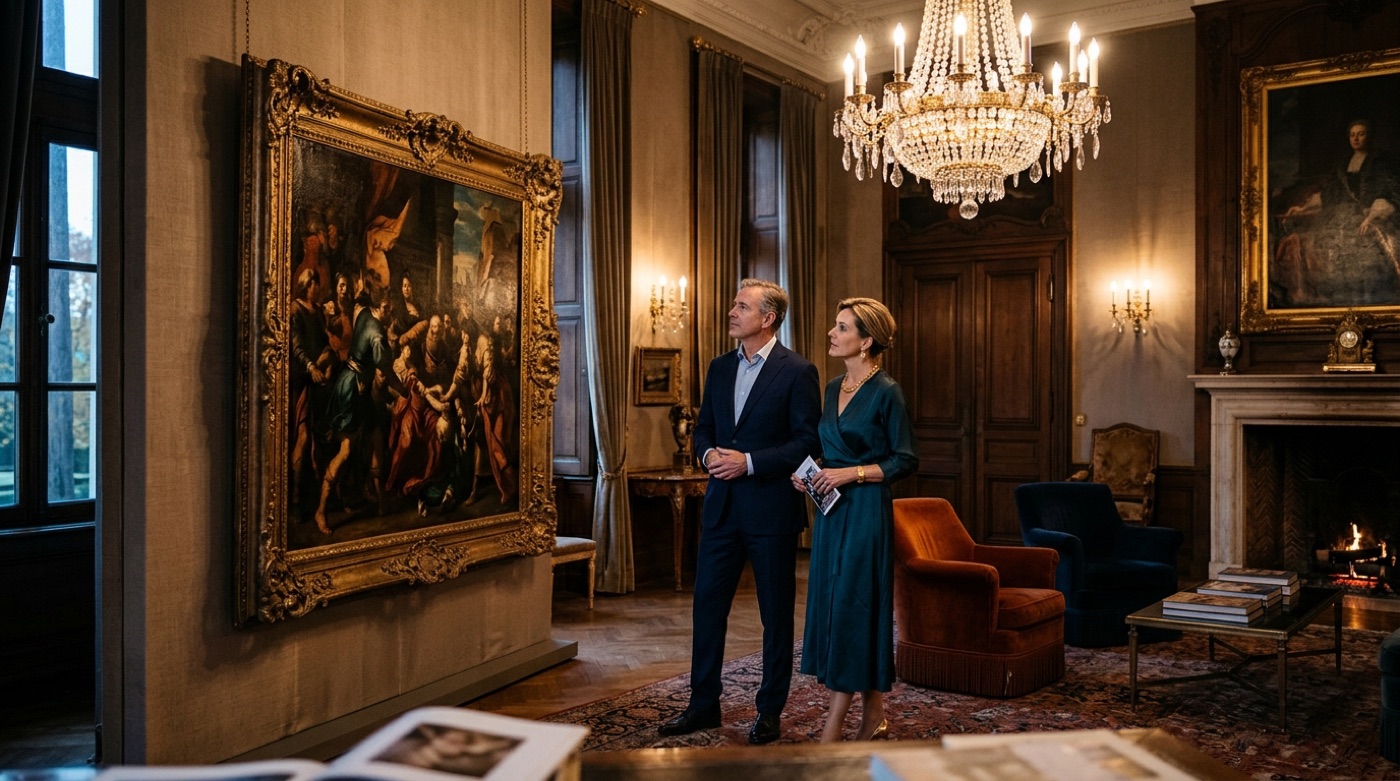
The cooling of online sales is not a failure of digitization. It is the top end of the art market returning to what it has always been: relationships, presence and memorable meetings. Gallery AI belongs behind those meetings, doing the homework so the sales team can give their full attention to the collector in front of them.
At TitApeX, we believe AI should handle perfection while people create emotion. If your gallery or art brand is thinking about a collector data system, a pre- and post-fair follow-up process, or a website and online viewing room that meet the expectations of high-end collectors, take a look at our services or get in touch. You may also enjoy "More New Collectors, More Homework: How AI Sharpens Positioning in the Art Market."
Comments