Smart Model, Clueless About Your Company: Why AI Agent Context Is the Next Thing to Build

Ask an AI agent whether a customer will renew next month and it can write a fluent analysis without knowing that the same customer filed a complaint last week and the case is still open. The model is smart enough. The problem is that it does not know your company. In late September 2026, Microsoft and Alibaba Cloud each shipped a context layer for AI agents in the same week, which marks the next area of competition: AI agent context, meaning how much an agent understands about your data, your vocabulary and your rules, now shapes results more than which model you pick. For business owners, a large part of this work can start without buying any new platform.
Why AI agent context matters: one question, a different answer from every agent

Most companies adopt AI agents one at a time: one for support, one for sales, one for finance. Each time, someone has to explain again what "active customer" means here, which order statuses exist, and what discount level needs a manager's approval. Three problems follow:
- Inconsistent answers: the sales agent reports 120 active customers this month and the finance agent reports 95, because the two definitions differ.
- Duplicated work: the same rules are rewritten into the prompt of every agent.
- Overreach: an agent that does not know which actions need human approval has to be blocked from everything or allowed to do everything.
James Oleinik, Partner Director of Product Management for Microsoft Dataverse and Work IQ, pointed to the answer in an official post on September 25: customers have spent years building their business expertise into applications and processes, and that investment should become a foundation for agents, not something to rebuild for each one.
Microsoft Work IQ: turning existing configuration into context

Microsoft's approach is called Work IQ, a layer beneath Copilot and agents. Public preview began on September 30, 2026 and is rolling out through October, with ERP apps such as Finance and Operations due in late October. According to the official post and Cloud Wars' coverage, it has three main parts:
- A semantic model: it derives meaning from the views, forms and relationships that already exist in Dynamics 365 and Power Apps, and adds a business glossary. Admins can switch off signals, exclude outdated views and add company vocabulary. Every agent shares the same interpretation.
- Business skills: playbooks that pair step-by-step instructions with the context they need, defined once and reused by every connected agent. Microsoft's example is renewal readiness: check critical cases, confirm who owns the service improvement plan, document the commitment and obtain approval.
- Governed actions: the agent proposes a change, follows the required approvals, and writes back to the source record within the user's existing permissions.
Note that this is tied to Microsoft's own business applications, billed by usage, and still in preview. What is worth borrowing is not the product itself but the way it splits context into three parts: what terms mean, how work is done, and where actions stop.
Alibaba Cloud is doing the same: context becomes infrastructure
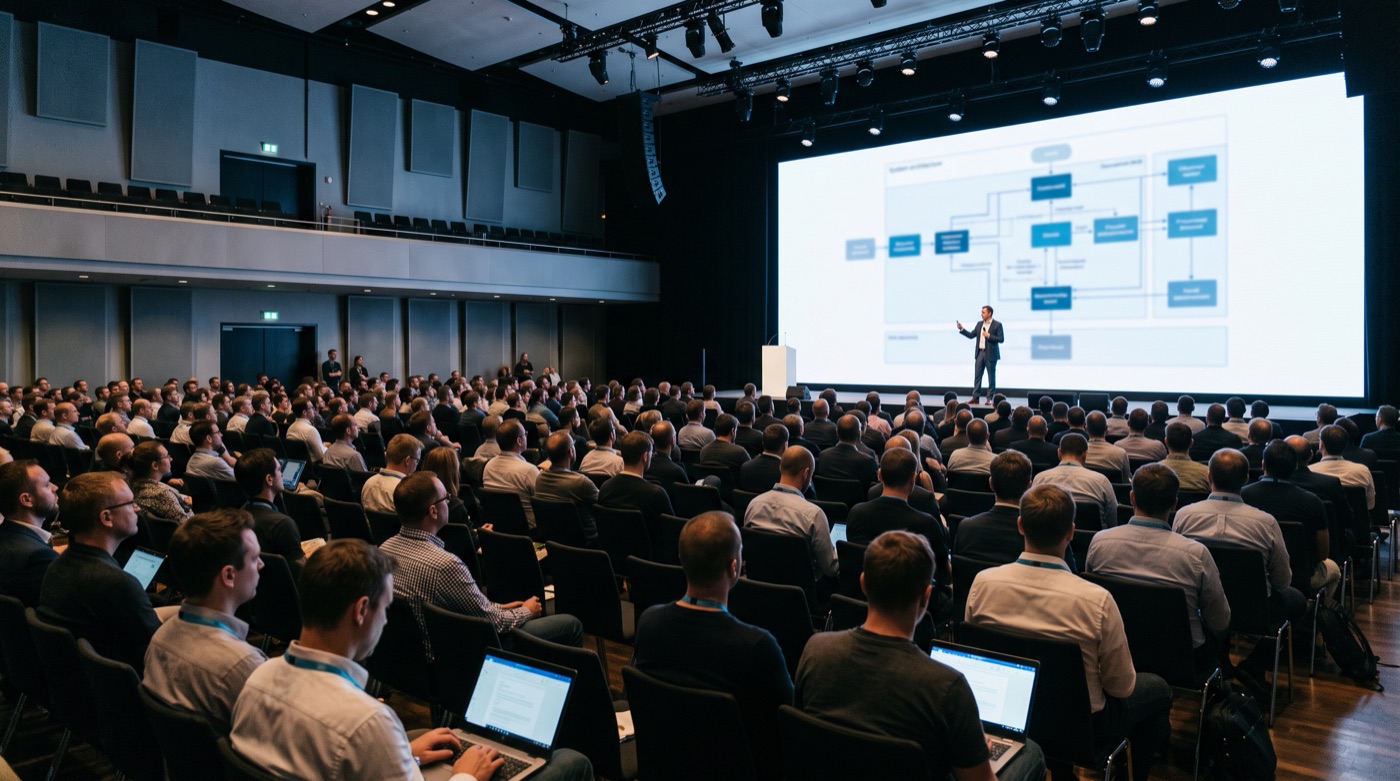
In the same week, Alibaba Cloud presented its full-stack AI roadmap at the Apsara Conference on September 25. It includes AgentCore, an enterprise platform to build, run and manage AI agents, and a context service called Agent Context. According to Alibaba Group's release, its Context Engine connects a company's documents, business systems, chat records and multimodal data into a single foundation, and the company says it cuts token usage by up to 67%.
That figure is a vendor-reported upper bound, and real results depend on the scenario. It still illustrates a point that is easy to miss: when context is well organized, an agent does not need to reload a pile of data every time, so answers are more accurate and cheaper.
The two companies take different routes in the same direction. When large vendors start building context as a separate layer, it has moved from a prompting technique to infrastructure, in the same category as a database.
Start without a platform: three documents for smaller businesses

You can prepare along the same three lines without Dynamics 365 or Alibaba Cloud. Any AI tool can read these three documents:
1. A company glossary
List the 20 to 30 terms your team uses most and misreads most: active customer, closed deal, rush order, VIP, the difference between a return and an exchange. Give each a one-sentence definition and note which system and field holds the data.
2. A process playbook
Pick the three most repeated jobs, such as quoting, handling a complaint or month-end reconciliation, and write each as five to eight steps: what to check first, what the decision rule is, and where the result is recorded. This is what Microsoft calls a business skill.
3. Approval rules
Use three columns: what an agent may do on its own, what it must ask a person about first, and what it must never do. Money, external messages and data deletion usually belong in the last two.
Once written, these documents carry over to whichever agent you use later. If several agents are already running in your company, start with the inventory described in How Many AI Agents Is Your Company Running?. If your data is still locked inside older systems, see Don't Rewrite It Yet: Making Legacy Systems Ready for AI Agents.
Conclusion: AI executes, people define how the company works

Models will keep getting stronger and cheaper, and none of that is in your control. What you do control, and what nobody else can copy, is how your company defines a good customer, how it handles a problem order, and which decisions need a person to say yes. Once those are written down, AI can work the way your own people do.
When TitApeX helps a business adopt AI, we usually begin with these three documents and then decide which tools to connect and whether custom development is needed. If you want to know where to start organizing your own company's context, talk to us.
Comments