
Yacht Broker CRM: Buy Off-the-Shelf or Build Custom? 4 Decisions for 2026

A buyer leaves a business card at a boat show and, three months later, buys through another broker. In yachting that is hardly news. The problem is rarely effort; it is that client data lives in card boxes, inboxes, spreadsheets and salespeople's phones. In Pied Piper's 2025 mystery-shopper study of dealers for the 17 largest pontoon boat brands in North America, only 19% of phone inquiries ended with an appointment or visit, against 92% at car dealerships. Yacht brokers have fewer buyers, bigger tickets and longer decisions, so every lost lead costs more. That is why more brokerages are taking their yacht broker CRM seriously, and asking whether to buy one off the shelf or build their own.
A yacht broker CRM manages a very long relationship
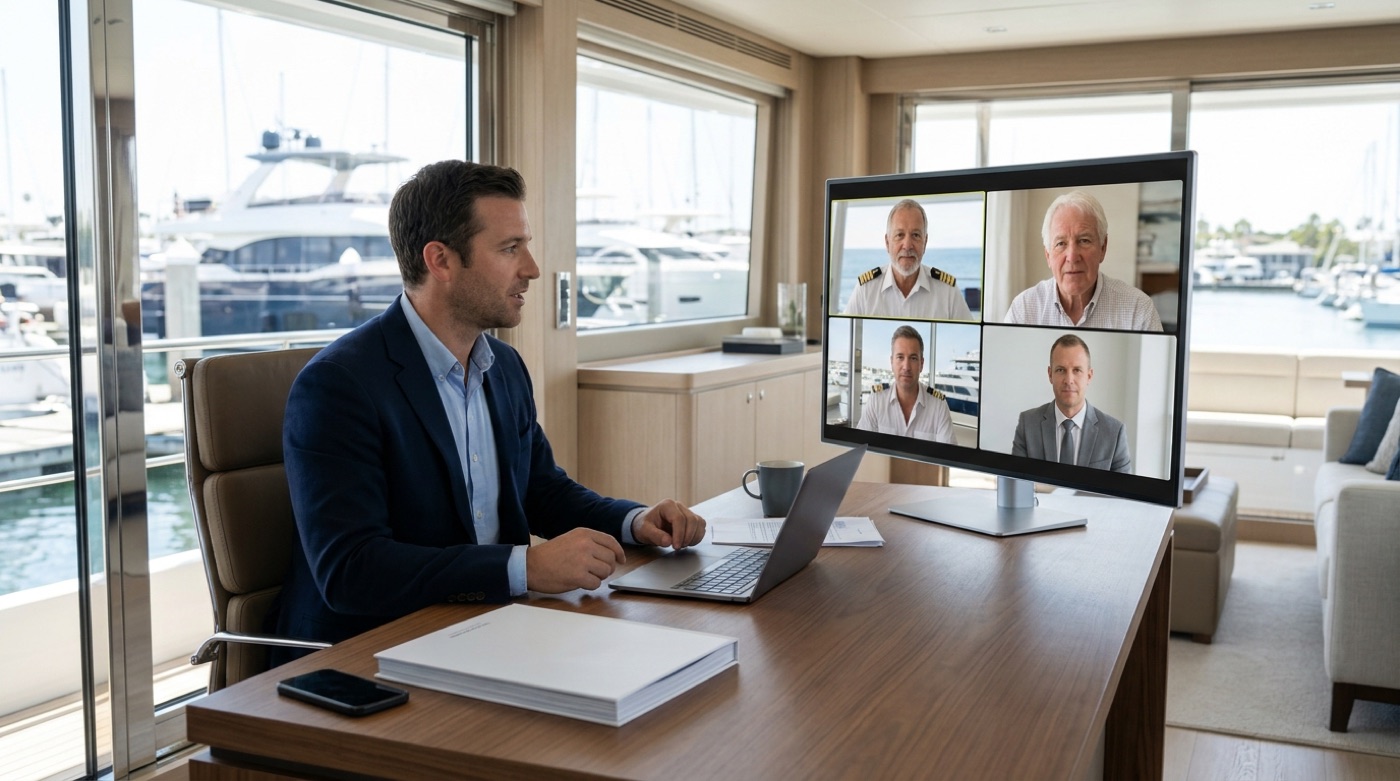
A car dealer's CRM asks who will buy this month. A yacht broker's asks how many times this client will change boats in the next five years, and how much bigger each one will be. Behind one client there may be a captain, a family office, lawyers and a management company, and the person who signs is not always the person who first inquired.
Off-the-shelf systems are already moving this way. YATCO's CRM Lead Manager records what clients searched for and which yachts they viewed on the brokerage's website, then emails them automatically when a matching yacht comes to market, drops in price or sells; client profiles can hold previously owned yachts and personal details. TheYachtMarket launched Stantia at the Southampton International Boat Show in 2024, bringing inventory, listing syndication to multiple portals, inquiries and communication history into one place. Its May 2026 update added two-way matching: enter a client's make, length, budget and location to see suitable boats in stock, or open a boat to see which clients fit it. Rightboat has partnered with YachtOne to connect its buyer marketplace with brokerage websites, CRM and deal pipelines, and the two are exploring webhooks that would send leads straight into the CRM.
The direction is clear: listings, buyer demand and client relationships are merging into one system. The only question is whether that system belongs to a platform or to you.
When off-the-shelf is enough

If you run a brokerage of three to ten brokers, your inventory gets its exposure mainly through portals such as YachtWorld, YATCO or TheYachtMarket, and your sales process looks like everyone else's, an off-the-shelf yacht broker CRM is usually the best value. It goes live quickly, syndication is already built, and most brokers have used one before.
Three questions matter more than the feature list:
- Where does your inventory mainly live? A CRM from your main portal syncs most easily, and is also the hardest to leave.
- Can you export everything? Clients, interaction history and matching criteria should all export in standard formats. It is your client list, not the platform's.
- Does it connect to your own website and forms? If website inquiries have to be copied into the CRM by hand, even the best system will leak.
When to build custom

In these situations, packaged systems start to strain and custom software development is worth evaluating:
You are also a shipyard or brand. New-build inquiries come with a configuration: hull colour, metal accents, interior options. The site we built for Venus Aurelia lets visitors rotate the yacht 360 degrees, explore five areas from the upper deck to the engineering spaces, and pair hull paint with accent metals in the Atelier section. The valuable moment on a site like this is when a client clicks "Arrange a private viewing" and the sales team can see, at the same time, which colours they chose and where they spent the most time. A generic CRM will almost never build that data flow for you.
Your clients span several language markets. One client may inquire in English, deal with a Chinese-speaking contact and view boats in the Middle East. Multilingual profiles, time zones and handoffs need to be designed around your organisation.
Sales, charter and after-sales serve the same people. A client who charters, then buys, then hands over management and resale: split across three systems, you never see that client's full value.
The data you hold is sensitive. Passports, spouse details and wealth information need field-level permissions and access logs.
Four priorities for planning and building
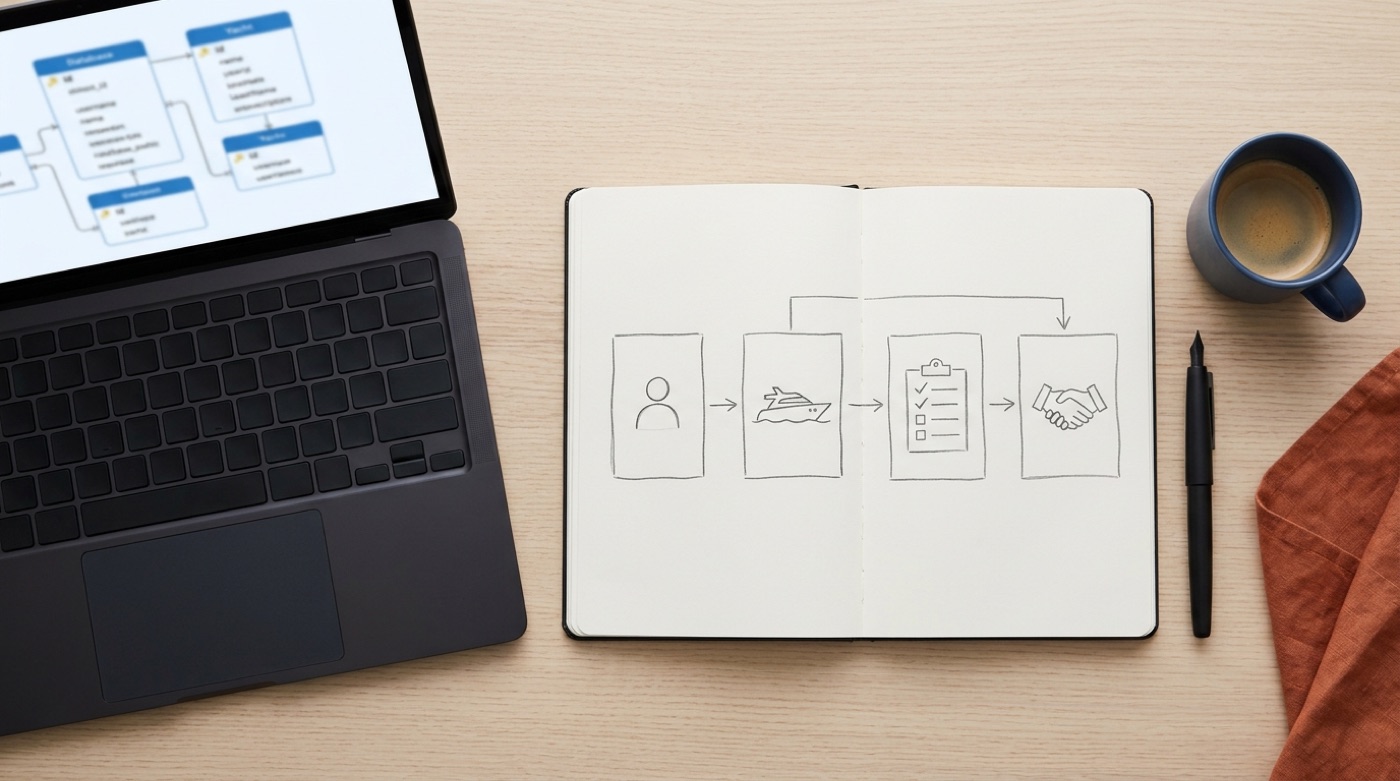
Model the data before designing screens
The heart of a yacht broker CRM is the relationship between four objects: client, vessel, requirement and representative. A client can have several requirements (a bigger boat, a charter), each requirement matches several vessels, and a representative such as a captain or family office must be recorded as speaking for someone. Get this map right and matching, alerts and reports become possible.
Integration matters more than features
Website forms, 3D viewers or configurators, portal listings and inquiries, email and messaging apps should all feed one pipeline. Use the portal's data feeds or webhooks where they exist, and scheduled sync only where they do not. Tag every inquiry with its source so you can later tell which portal and which boat show earned its budget.
Get boat show leads into the system the same day
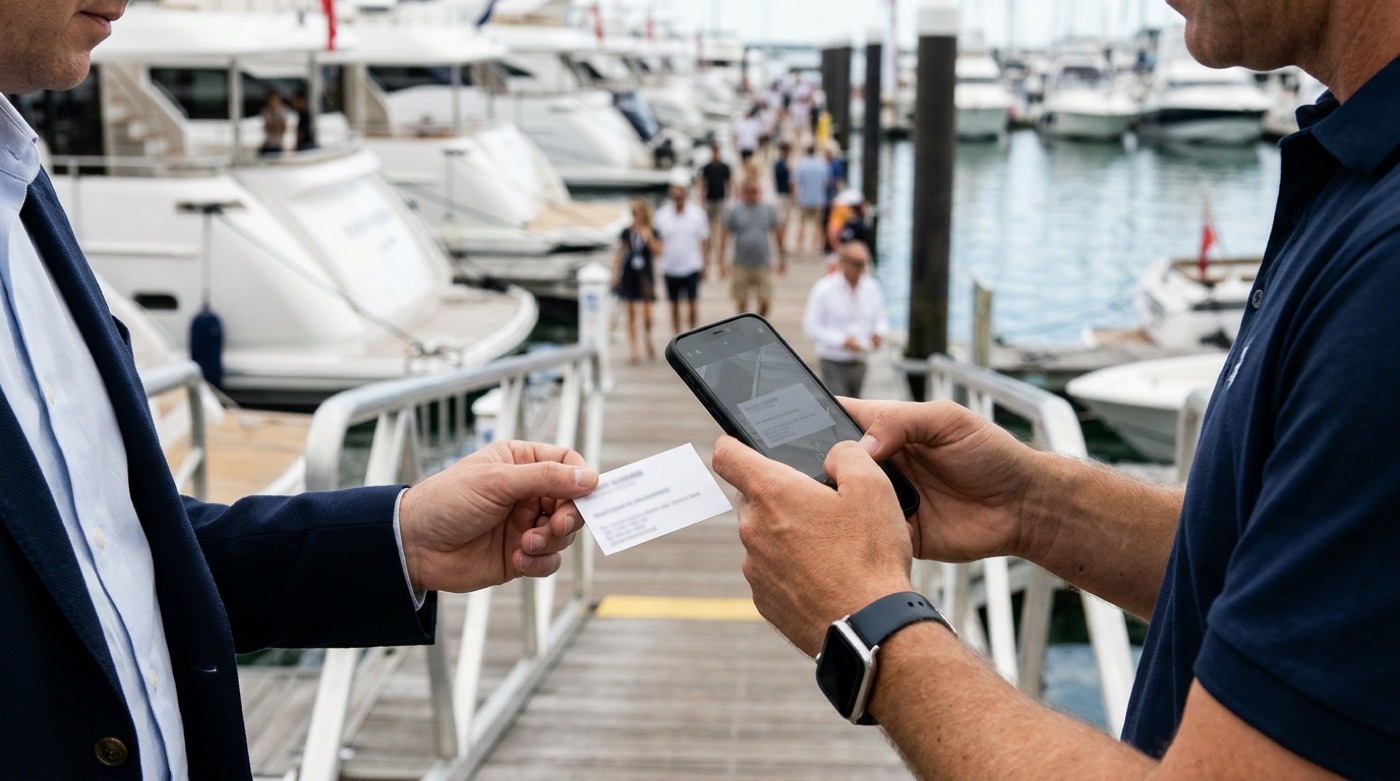
Boat shows are the industry's most expensive way to meet buyers and the easiest place to lose them. A quick mobile capture page, scanning a card or typing a name, that puts the lead into the CRM with an owner the same day is more useful than any advanced feature.
Start with one team and one stretch of the process
Get "inquiry to private viewing" right first, let one broker team use it for one show season, then add charter, after-sales and reporting. AI can be one of the tools here, for example summarising six months of contact with a client, but deciding whether to make the call, and how to open it, is still the broker's job.
The most common pitfalls
Duplicate clients. The same buyer emails two brokers from two addresses, the system shows two people, and commission disputes follow. Agree matching rules and ownership principles before launch.
Doing too much at once. Trying to fit inventory, finance, contracts and marketing into version one, and still not being live a year later.
Migrating messy data. Importing business cards and spreadsheets as they are means the new system is chaotic on day one. Clean, merge and complete fields before migration.
Brokers who won't use it. If adding a client takes twenty fields, people go back to their phone notes. Keep required fields minimal and let the system fill the rest from emails and forms.
Closing thoughts

Yacht brokerage runs on people: remembering the name of a client's last boat, knowing when they will want to move up. A CRM exists so that memory does not walk out the door when a broker leaves. If you are small and your process is standard, buy off the shelf and negotiate your data-export rights. If you deal with configurations, multiple languages, combined charter and sales, or high privacy demands, your own system will usually cost less over time. For the market context on pricing and buyers, see our analysis of 2,197 yachts for sale. If you are evaluating a yacht broker CRM or a client system for a shipyard, talk to us and we will start from your current client list and process.
References
- Pied Piper PSI 2025 pontoon dealer telephone lead study (Powersports Business)
- YATCO CRM Lead Manager features
- TheYachtMarket unveils Stantia at Southampton (Powerboat & RIB)
- Stantia boat matching update (British Marine, May 2026)
- Rightboat and YachtOne partnership (Marine Business World)
- Venus Aurelia yacht brand website
Comments